1. Who this is for
This is for teams selling IT services or software to businesses. Our system handles the targeting and the invites; you focus on the conversations.
Be upfront and human. Never lead with a pitch. Always lead with value, and let them know what's in it for them.
- Keep messages to 2–4 short lines.
- Test your messages by saying them aloud. If it doesn't sound natural, rewrite it.
2. How our system works
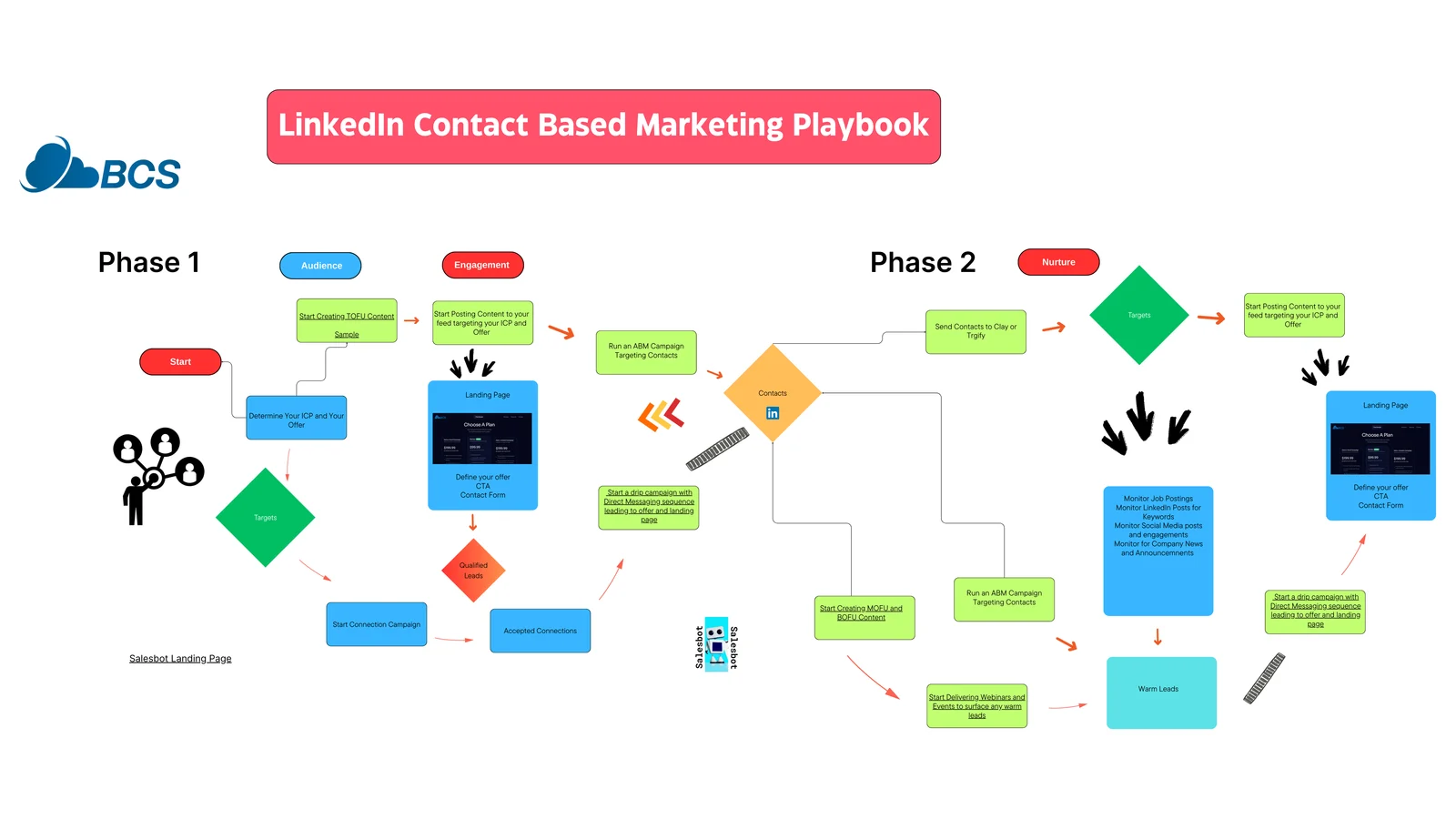
A two-phase workflow. The platform handles ICP building, list creation, connection invites, and thank-you messages. You focus on understanding your unique value proposition and go-to-market offers, and on engaging authentically once a connection is made.
3. Profile optimization
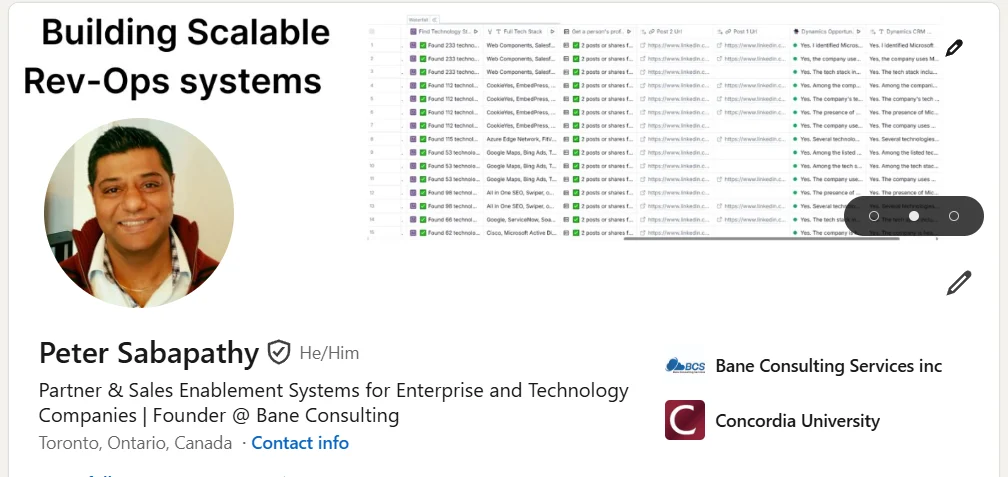
Banner
Treat the banner like a billboard: answer “Why should my ICP pay attention to me?”
We help Microsoft Partners grow Azure & Dynamics 365 revenue through AI-powered outreach.
Profile photo
A professional, shoulders-up shot in natural light. Authenticity matters more than formality.
Headline formula
Role + Audience + Outcome.
Founder @ Bane Consulting | Helping CSPs/MSPs book more meetings with IT decision-makers via signal-based prospecting.
About section
Structure it 80% about the prospect, 20% about you. Open with prospect pain, add credibility, explain your framework, and close with a soft CTA.
Featured section
Pin your proof: demo videos, case studies, or high-performing posts.
Experience & proof points
Write outcome-driven bullets instead of duties.
Grew Canada division to $1M ARR in 12 months through outbound campaigns.
4. Understanding your target audience
Lead with value, not with your list of services.
Common buyer roles
- IT leadership — CIO, VP/Director of IT, Infrastructure/Cloud Head
- Security — CISO, Security Manager, M365 Security/Compliance Lead
- Apps & data — Business Applications Head, D365 Lead, Analytics/BI Manager
- Ops & finance — COO, Controller, RevOps
Six key signals we surface
- Role change (within the last 90 days)
- Hiring in your service area
- An initiative announced
- A product launch or upgrade
- Compliance or incident pressure
- Industry event or webinar participation
5. Buyer awareness stages
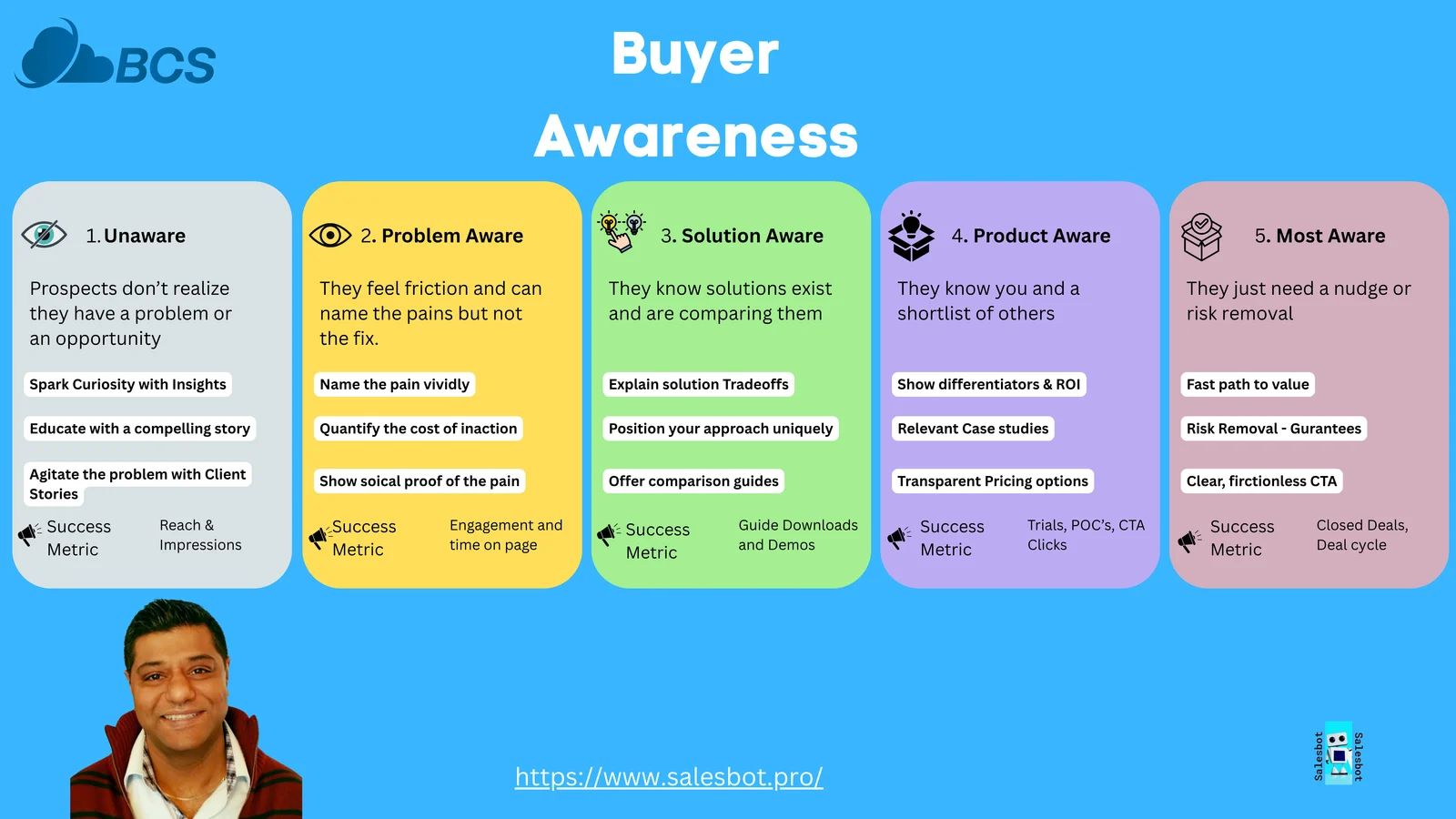
Cold email is a broadcast medium. LinkedIn is a research platform. Timing and context matter far more than clever copywriting.
The sophistication required on LinkedIn isn't about clever copywriting. It's about understanding buyer awareness stages.
Before you engage, ask: Where are they in their journey? What problems are they actively solving? Are they in a buying cycle, and at what stage?
6. After they connect — what you do (no pitch)
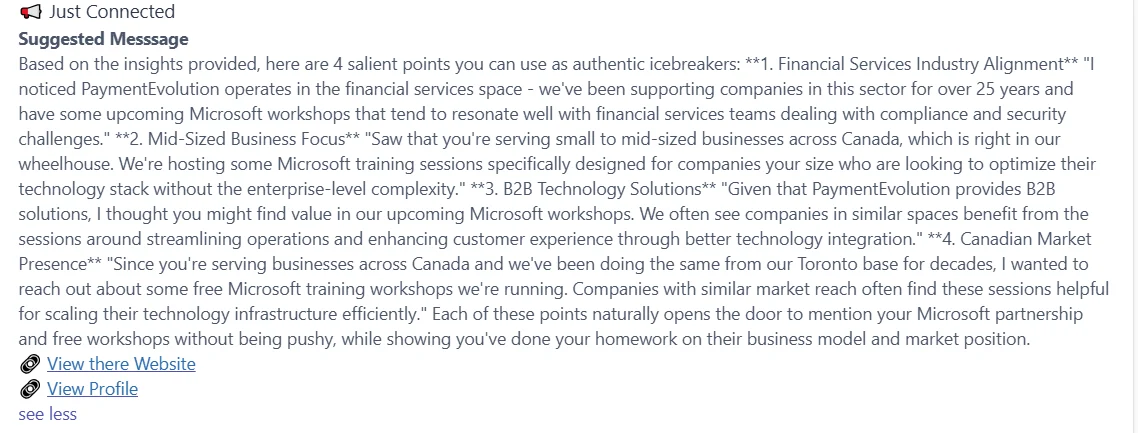
Spend about 10 minutes per new connection reviewing their LinkedIn profile, recent posts, company site, news, and the signal notes we provide.
Sample intros from live campaigns
Given your focus on quality improvement at ABC Health Care, I thought you might be interested in our upcoming workshop on healthcare process automation using Power Automate…
Given XYZ's presence in both real estate and healthcare, I thought you might be interested in an upcoming Microsoft 365 Copilot session we're hosting…
Do not push for a meeting initially. Your first goal is to identify if they fit your ICP, and whether we've surfaced any signals that indicate now is a good time to discuss it.
7. Follow-up messaging
Tone checklist (before you send)
- Would you say this out loud?
- Is it 2–4 short lines with one clear point?
- Are you offering something small and useful?
- Would this feel acceptable to receive if you were busy?
Focus on outcomes
- Increased efficiency
- Cost savings
- Improved security
- New stack features
What actually earns a reply
Across our campaigns, three angles consistently outperform everything else. None of them lead with a pitch.
- An invitation to a session on something new they are already thinking about, Copilot and agentic AI being the current ones.
- An assessment of their existing setup, where the offer is a clear-eyed look rather than a proposal.
- A data integrity or AI-readiness assessment, which lands because most teams know their data is not ready and few want to say so first.
Real messages from our campaigns
Hi again, if you think anyone on the team may be interested. We have regular webinars on topics like Power BI and IT Security. We have 2 scheduled for the upcoming month around Power BI and Device Management. If you like, I will be happy to send over more information.
Nothing clever about it. It offers something real, asks for almost nothing, and gives them an easy way to pass it to someone else on the team.
Microsoft is hosting a free 'Dashboard in a Day' workshop on December 11, and I wanted to flag it for your team. It's a hands on session. Attendees build a working Power BI dashboard from scratch covering data modelling and visualization fundamentals. Why I'm reaching out: we deliver this workshop and we focus heavily on pharma. The challenge we solve most often is unifying 3rd party distribution data, wholesaler inventory, chargebacks and trace sales, with internal shipment data so leadership has real visibility into where product is actually moving, not just what left the warehouse. This workshop won't solve that directly, but it's a useful starting point for teams looking to build internal Power BI capability before tackling more complex data unification work. If this is relevant, please reply and I'll send the registration link.
This one is longer than the usual advice allows, and it works because every line earns its place. It names a real event, explains plainly why they were contacted, demonstrates specific knowledge of their industry, and then openly says the workshop will not solve their bigger problem. That last part is what makes the rest believable.
Notice what neither message does: ask for a meeting, claim a result, or describe a service. The reply is the only thing being asked for.
Light check-ins every few weeks or months follow the same pattern, with updated resources.
8. Messaging frameworks that actually work
The typical “high-converting” sequences that open with “We help [industry]…” and “Our clients typically see…” generate low-quality responses. Try these instead.
Framework 1 — Feedback request
I'm currently refining a [service/solution/product] designed to help [position] from the [industry] tackle challenges such as [specific challenges]. Your background makes you ideal to provide honest feedback. Could I shoot you over a quick Loom on our process?
Zero sales pressure. You're consulting them, not pitching them.
Framework 2 — Pain-point trigger
When I talk to other [their position] from the [their industry], they often share concerns such as [common challenges that align with what you offer]. I'm curious if any of this resonates with you?
You're demonstrating awareness of their challenges, which can spark genuine interest.
Never try to sell in writing. Ever. Selling happens in conversation.
9. Content strategy — stay relevant without writing from scratch
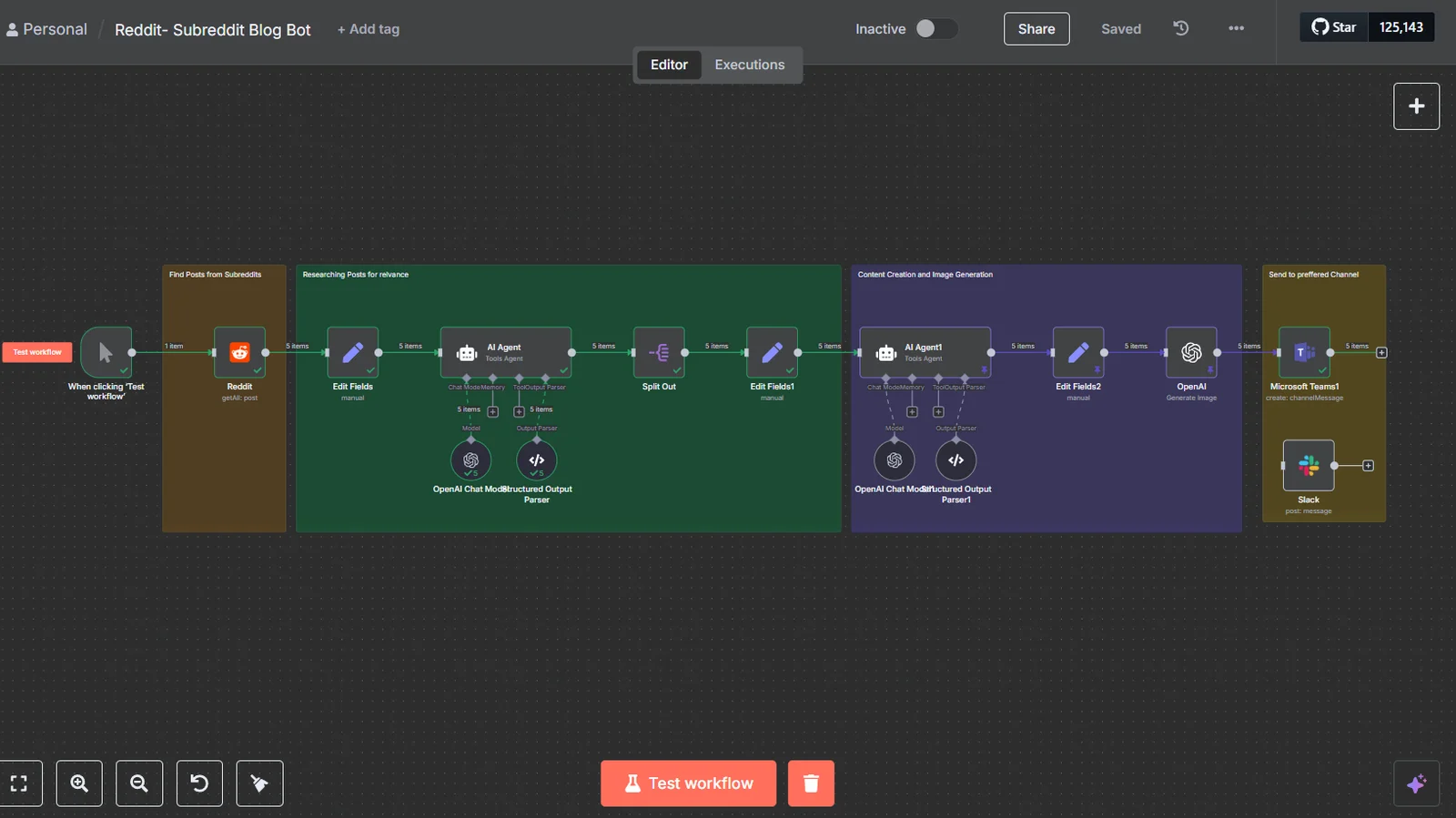
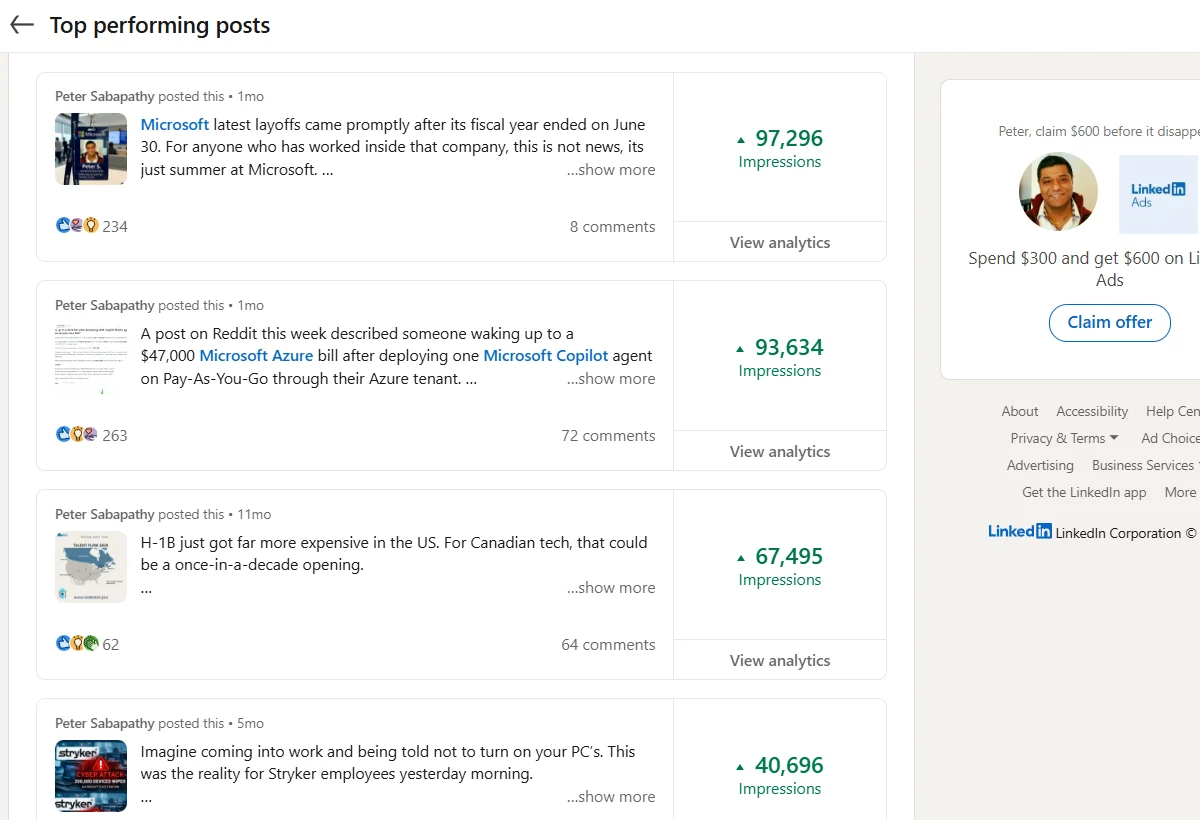
Our Reddit integration pulls trending posts and repurposes them into LinkedIn drafts, so you're never staring at a blank page.
Your role
Pick 1–2 subreddits (e.g. r/AZURE, r/sysadmin, r/Microsoft365), lightly personalize the draft, and post when you're available to reply for ~60 minutes.
Repurposing shape
Hook (1 line) → Why it matters (1–2 lines) → What to do (2–3 bullets) → Optional soft offer → Subtle subreddit attribution.
Paste-ready intro lines
A r/AZURE thread flagged 3 easy cost leaks after cutover. If you're mid-migration, sanity-check these first:
From r/Microsoft365: pilots with a tiny task list first see better stickiness. If you're testing Copilot, try this:
r/cybersecurity reminder: week-one wins matter. Five checks we see teams run first:
From r/dynamics365: stuck deals improve when stages have clear rules. Here's what “done” means for each stage:
Content guidelines
- Don't post content that sounds like an ad.
- Avoid listing certifications and awards (save those for the company page).
- Focus on teaching and delivering real value.
10. Cadence
Daily
- Check your Teams channel for new connections and review the notes.
- Reply to messages within hours.
- Spend 10–15 minutes reviewing your feed and engaging with relevant posts.
- Review new connections' posts and engage appropriately.
- Keep replies and comments short (2–4 lines max).
- Monitor comment impressions to see what resonates.
Weekly
- Post 1–2 times minimum.
- Engage on others' posts to improve your own connection rates.
Tone guardrails
- No salesy language or forced comments.
- Skip it if it feels uncomfortable.
- Write conversationally; 2–4 short lines maximum.
Building the skill
- Anchor around topics — tie posts to upcoming webinars or workshops.
- Build rhythm — use formats like “Tip Tuesday” with the occasional poll.
You've reached the end of the guide. Bookmark this page and refer back as you refine your outreach strategy.